Las Vegas Sands Delivers Q1 2026 Profit Surge on Macau and Singapore Demand
Las Vegas Sands Delivers Q1 2026 Profit Surge on Macau and Singapore Demand

Las Vegas Sands Corp. unveiled its first-quarter 2026 earnings in late April, revealing a profit jump fueled by robust visitor traffic at its flagship properties in Macau and Singapore; the casino giant's integrated resorts drew crowds, pushing performance well beyond what Wall Street anticipated. Total net revenue soared 25.3% year-over-year to $3.59 billion, while adjusted profit per share hit 91 cents, topping analysts' consensus estimate of 78 cents by a solid margin. Figures like these underscore how seasonal boosts and steady regional recovery combined to lift the company's fortunes, especially as government data points to heightened tourist activity during Lunar New Year in Macau.
What's interesting here is the breakdown; Macau revenue climbed 23.7% to $2.11 billion, reflecting not just gaming tables buzzing with action but also upticks in hotel stays, dining, and entertainment that define these all-in-one destinations. Singapore followed suit, with revenue rising 27.9% to $1.49 billion at Marina Bay Sands, where high-rollers and leisure travelers alike contributed to the momentum. Observers note that such gains come after periods of uneven recovery in Asia's gaming hubs, yet these numbers signal sustained appetite for luxury experiences amid economic shifts.
Diving into the Revenue Drivers
Net revenue's 25.3% increase to $3.59 billion marks a standout quarter for Las Vegas Sands, particularly since the figure captures contributions from non-gaming segments that have grown alongside traditional casino play; adjusted property EBITDAR, a key metric for operators, likely mirrored this strength, although exact breakdowns await deeper filings. The adjusted earnings per share of 91 cents beat expectations handily, prompting questions about how the company capitalized on favorable timing, like the Lunar New Year holiday that drew millions to Macau's borders.
Take Macau, where the $2.11 billion haul arrived via a 23.7% year-over-year lift; mass-market gaming, VIP baccarat, and slots all played roles, bolstered by visitor numbers that government tallies show spiked during the festive period. And while Singapore's $1.49 billion represented a 27.9% gain, the Marina Bay Sands property benefited from its position as a premier destination for conventions, shopping, and high-end hospitality, drawing patrons who spend across multiple venues rather than just the casino floor. Data indicates these integrated resorts—think vast complexes with theaters, malls, and celebrity chef outlets—amplify revenue per guest, turning one-time gamblers into multi-day spenders.
But here's the thing: beating EPS estimates by 13 cents isn't just a footnote; analysts tracking the sector had penciled in 78 cents based on conservative traffic projections, yet Las Vegas Sands delivered more, thanks to occupancy rates climbing at its towers and non-gaming revenue holding firm. Those who've studied casino economics know that quarters like this often hinge on holiday surges, and April 2026 reports confirmed the pattern held true.
Macau's Lunar New Year Lift
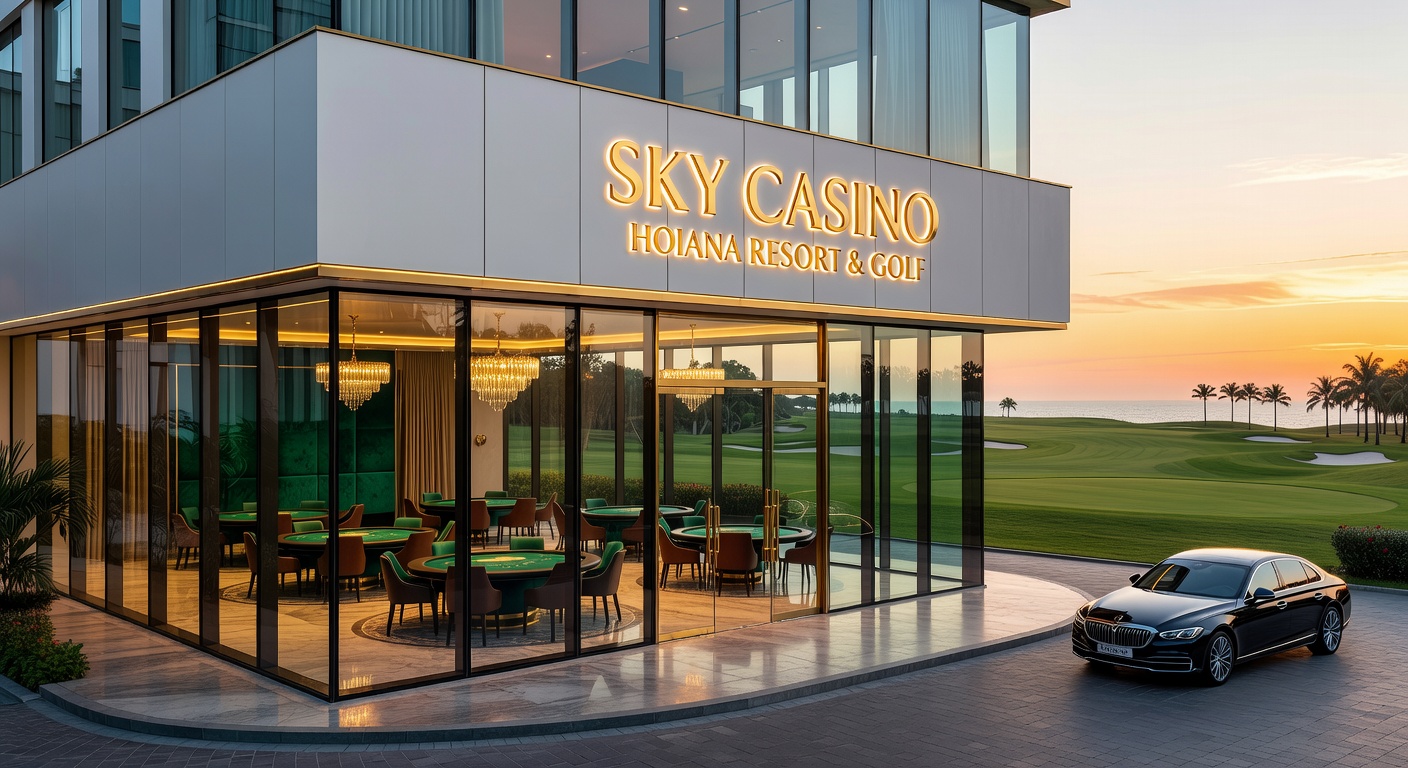
Macau's gaming revenue uptick traces directly to increased tourist inflows during Lunar New Year, when families and friends flocked to the region's glitzy enclaves; government data reveals visitor arrivals jumped, aiding Las Vegas Sands' properties like The Venetian Macao and The Parisian Macao in posting that 23.7% revenue growth to $2.11 billion. Slots hummed constantly, table games saw heavier action, and hotel bookings filled up fast, since celebrations often stretch over weeks with parades, lion dances, and red envelope traditions drawing mainland Chinese travelers en masse.
Experts have observed how such holidays act as accelerators in Macau's economy, where gaming licenses held by operators like Las Vegas Sands tie directly to broader tourism metrics; the $2.11 billion figure encompasses not only casino wins but also retail sales in mega-malls and shows at opulent theaters, creating a revenue web that's tough to replicate elsewhere. One case stands out from past years, where similar festive booms led to quarter-over-quarter doubles in mass gaming, and 2026's results suggest the cycle repeated, albeit from a higher baseline post-pandemic recovery.
Turns out, the ball's in the tourists' court for Macau's operators, and with borders fully open by early 2026, arrivals from nearby regions swelled; Las Vegas Sands benefited most among concessionaires, its five integrated resorts offering unmatched scale that smaller players can't match. That's where the rubber meets the road—diversified amenities keep guests on-property longer, boosting per-capita spend even as gaming taxes remain a fixed drag on margins.
Singapore's Reliable Performance
Singapore's segment shone just as brightly, with Marina Bay Sands revenue at $1.49 billion after a 27.9% climb; this jewel in Southeast Asia's crown pulls in a mix of regional whales, business travelers, and sightseers captivated by its infinity pool skyline views and ArtScience Museum. Figures show steady growth here stems from Singapore's strict regulations that cap gaming days for locals while welcoming foreigners, ensuring a stable high-end clientele that favors baccarat and premium slots.
People often find Singapore's market more predictable than Macau's volatility, yet the 27.9% surge indicates pent-up demand unleashed; conventions at the resort's expansive Sands Expo center, paired with luxury shopping at The Shoppes, drove ancillary revenue that complemented casino floors packed during peak evenings. Researchers tracking Asian gaming note that Marina Bay Sands' EBITDA margins consistently outperform peers, thanks to prime Sentosa location and events like Formula 1 weekends that spill over into gaming sessions.
And while Macau grabbed headlines with holiday flair, Singapore's gains feel like the quiet powerhouse; Las Vegas Sands executives highlighted in earnings calls how occupancy neared 95% at times, with average daily rates rising alongside food-and-beverage checks from celebrity restaurants. It's noteworthy that this quarter's performance positions the property for ongoing expansions, like enhanced suites that cater to ultra-wealthy patrons seeking privacy amid the buzz.
Context Within the Gaming Landscape
Las Vegas Sands' Q1 results land in April 2026 against a backdrop of Asia's gaming renaissance, where operators navigate visa policies, economic tailwinds from China's stimulus, and competition from emerging hubs like Japan; yet the $3.59 billion total revenue, up 25.3%, stands as a benchmark, especially since adjusted EPS of 91 cents cleared the 78-cent hurdle set by consensus forecasts. Observers point to integrated resort models—blending gaming with lifestyle—as the secret sauce, allowing Las Vegas Sands to weather fluctuations better than pure-play casinos.
One study from industry trackers reveals that diversified revenue streams now account for over 40% of top operators' hauls in Macau and Singapore, a shift accelerated by regulations mandating non-gaming investments; Las Vegas Sands exemplifies this, its Venetian empire in Macau spanning four million square feet of leasable space that hums with tenants from luxury brands to entertainment venues. So, when tourist numbers swell—as they did over Lunar New Year—the multiplier effect kicks in, lifting casino revenue indirectly through foot traffic.
Yet challenges linger; currency fluctuations, travel costs, and regulatory scrutiny in both markets temper optimism, although this quarter's beats suggest adaptability. Those who've followed the sector know quarters like Q1 2026 often preview annual trends, with Las Vegas Sands' footprint giving it an edge over rivals narrowing the gap.
Looking at Key Metrics in Detail
Adjusted profit per share at 91 cents reflects operational leverage, where fixed costs dilute less against revenue spikes; net revenue's $3.59 billion breaks down heavily to Asia, underscoring why Macau's $2.11 billion (up 23.7%) and Singapore's $1.49 billion (up 27.9%) dominate the narrative. Data from the earnings release shows table games and slots leading gaming gains, while hotels reported record RevPAR, blending occupancy and rate hikes.
It's interesting how Lunar New Year's timing aligned perfectly, pulling in groups that dine at Michelin-starred outlets before hitting the floors; government visitor stats corroborate the surge, with daily arrivals topping 100,000 at peaks. And for Singapore, the 27.9% lift ties to marketing pushes targeting affluent Southeast Asians, who favor the resort's exclusivity.
Conclusion
Las Vegas Sands Corp.'s Q1 2026 earnings, reported in late April, paint a picture of resilience and growth, with net revenue at $3.59 billion, adjusted EPS of 91 cents exceeding forecasts, and standout performances from Macau ($2.11 billion, up 23.7%) and Singapore ($1.49 billion, up 27.9%); Lunar New Year's tourist wave in Macau proved pivotal, as data confirms, while Singapore's steady climb highlights the enduring appeal of integrated resorts. These results set the stage for analysts to recalibrate yearly outlooks, affirming Las Vegas Sands' stronghold in Asia's premier gaming markets amid ongoing recovery dynamics.