Decoding Cumulative Activation Sequences in App-Driven Interactive Sessions Across Handheld Platforms
Written by Uma Jenkins · Aug 24, 2026
Decoding Cumulative Activation Sequences in App-Driven Interactive Sessions Across Handheld Platforms
Researchers tracking user patterns in mobile environments have identified cumulative activation sequences as structured chains of inputs that build across multiple app layers during single sessions on handheld platforms, and these sequences emerge when users navigate interactive elements in rapid succession while the system logs each step for later analysis. Data compiled through August 2026 shows that session logs from major operating systems capture thousands of such chains daily, with timestamps revealing how initial taps often trigger secondary prompts that accumulate into longer pathways.
Core Components of Sequence Mapping
Engineers at device manufacturers break these sequences into primary activation points followed by cumulative layers, whereas primary points register the first user command and subsequent layers record how that command branches into menu expansions or feature unlocks. Studies from the Australian Communications and Media Authority indicate that Android and iOS platforms handle these layers through distinct kernel calls, yet both systems produce comparable sequence lengths when users engage with real-time response features. Observers note that handheld hardware constraints such as screen size and processor speed directly influence how many layers can accumulate before a session resets.
Platform Variations in Sequence Processing
Cross-device comparisons reveal that iOS environments prioritize secure enclave checks during cumulative builds, while Android implementations route similar checks through varied hardware abstraction layers depending on the chipset. Figures released in August 2026 by Statistics Canada demonstrate that sessions on flagship devices accumulate 15 to 30 percent more layers than those on budget models because of faster memory access. Application developers therefore adjust their code to normalize sequence depth across price tiers so that interactive feedback remains consistent regardless of hardware.
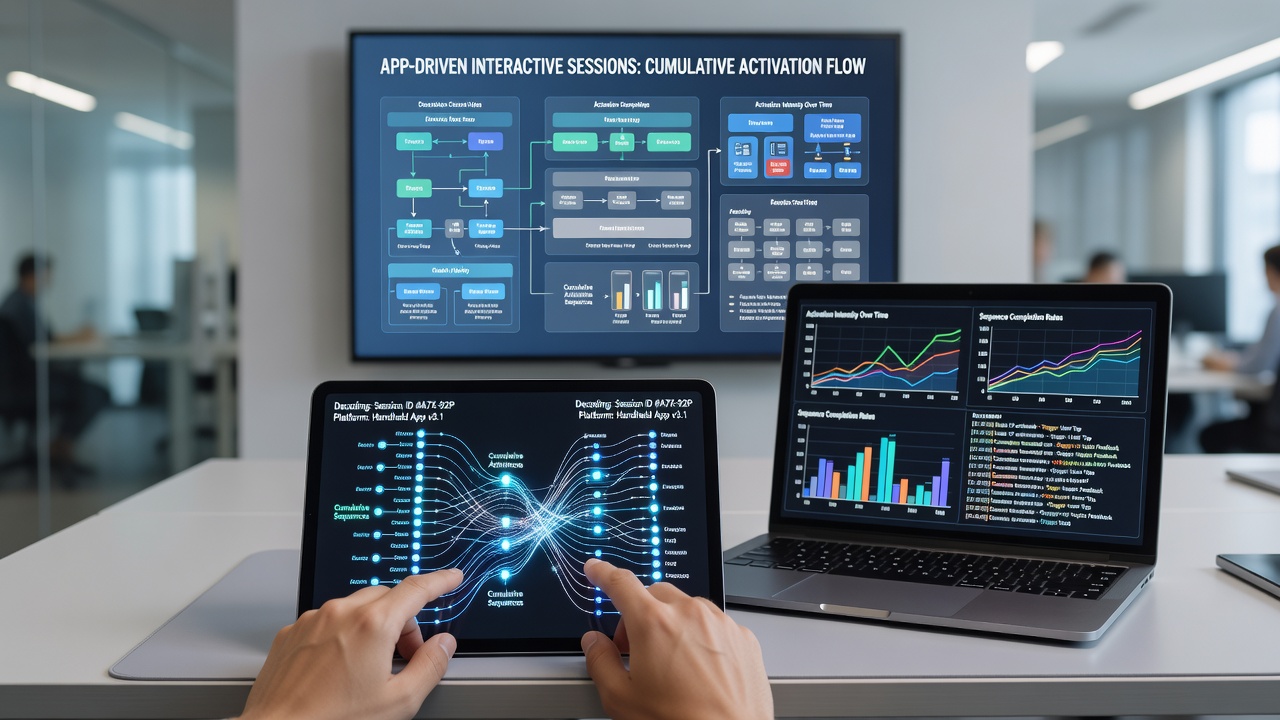
One research team at a European university examined logs from 50,000 sessions and found that sequence resets occur most often when battery levels drop below 20 percent, prompting the operating system to prune pending layers. That same study linked higher sequence complexity to increased data usage because each additional layer frequently requires fresh server calls.
Analytical Tools and Data Aggregation Methods
Industry groups including the Mobile Marketing Association have published guidelines for aggregating activation data without exposing individual identifiers, and these guidelines recommend hashing timestamps before storage. Government agencies in Singapore require similar hashing for any app that transmits session metrics across borders. Analysts combine these hashed records with heat-map visualizations to spot recurring patterns that developers can then streamline through interface adjustments.
What's interesting is how sequence length correlates with session duration across regions, according to reports from the New Zealand Commerce Commission, because longer chains appear in markets where users favor extended play sessions over quick checks. Developers therefore test cumulative thresholds during beta releases to prevent abrupt terminations that interrupt ongoing interactions.
Future Directions in Sequence Optimization
Hardware advances scheduled for late 2026 aim to increase on-device cache sizes, which researchers expect will allow sequences to extend further before external calls become necessary. Academic papers presented at mobile computing conferences highlight prototype algorithms that predict upcoming layers based on the first three activations, reducing perceived latency for users. Regulatory bodies in Canada continue to monitor how these predictive models handle personal data under existing privacy statutes.
Conclusion
Cumulative activation sequences represent a measurable aspect of handheld app performance that continues to evolve alongside device capabilities and regulatory frameworks. Organizations tracking these patterns through August 2026 data sets gain clearer insight into how users move through layered interfaces, and this insight supports refinements in both hardware design and software architecture across global markets.